Mixing Sourdough Bread In Bread Machine Bake In Oven
Baking sourdough bread is a time-honored tradition that has been enjoyed for centuries. Using a bread machine to mix the dough for sourdough bread is a modern convenience that makes it easier than ever to enjoy the flavor and texture of traditional sourdough bread. The final step in making sourdough bread is to bake it in the oven, a process that can be a bit daunting if you are unfamiliar with the technique.
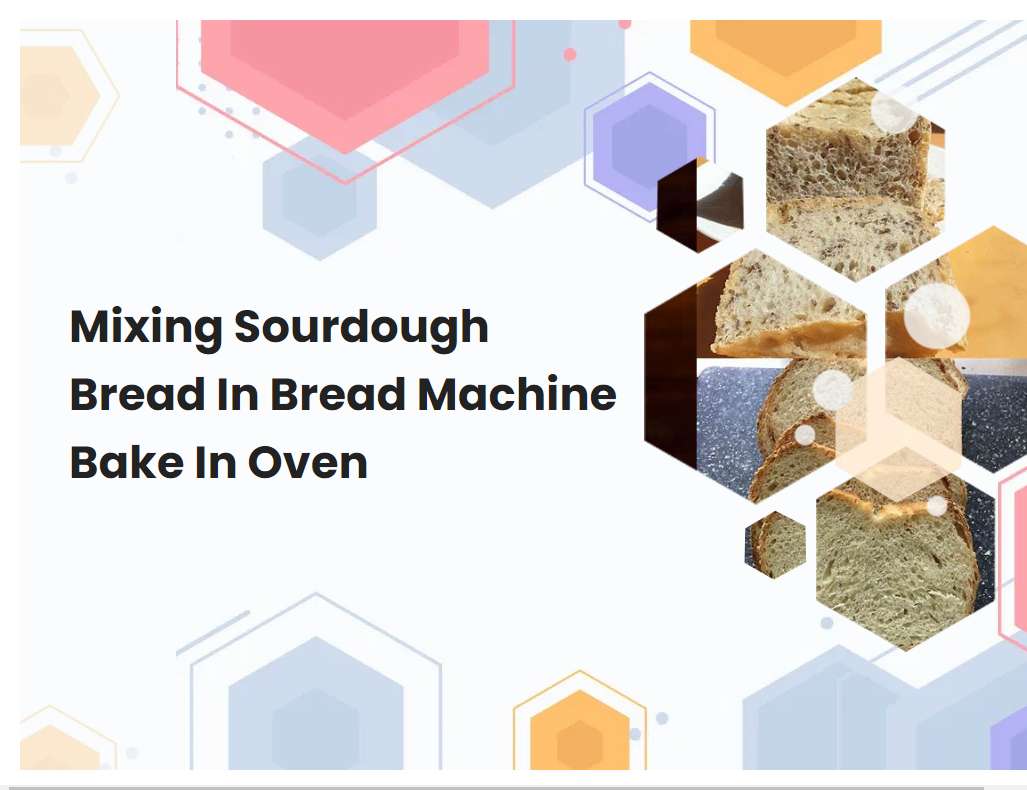
Use a basic sourdough bread recipe that is suitable for a bread machine.
A basic sourdough bread recipe for a bread machine is a great way to make delicious, homemade bread with minimal effort. To start, you'll need to make a sourdough starter by combining equal parts flour and warm water in a bowl and let it sit for several hours until it's bubbly and active. Once the starter is ready, you'll need to add the remaining ingredients in the order listed below and set your bread machine to the "dough" cycle.
Begin by adding 1 cup of lukewarm water and 1 cup of sourdough starter to the bread machine pan. Next, add 2 ½ cups of bread flour, 1 teaspoon of salt, 1 teaspoon of sugar, and 2 tablespoons of olive oil. Place the pan into the bread machine and press the "start" button. Once the cycle has finished, remove the dough from the pan and shape it into a loaf. Place it into a greased bread pan and let it rise for about an hour or until doubled in size. Preheat your oven to 375 degrees F, then bake the bread for 30-35 minutes or until golden brown. Once done, remove from the oven and let cool before slicing and serving. Enjoy!
Make sure your sourdough starter is active and bubbly before you add it to the ingredients.
Making sure your sourdough starter is active and bubbly is an important part of the sourdough baking process. A sourdough starter is a mixture of water, flour, and wild yeast, which is used to make a variety of sourdough breads. The wild yeast feeds on the sugars in the flour, and this fermentation process creates carbon dioxide gas, which makes the starter bubbly and active.
To ensure that your starter is properly active and bubbly, you should feed it regularly with equal parts flour and water, stirring it well to incorporate air into the mixture. A well-fed starter should become bubbly and active within a few hours. If your starter is not bubbly or active, it is likely that it needs to be fed or discarded and started fresh. Once your starter is active and bubbly, it is ready to be used in your sourdough recipes.
See also: Fleischmann's Bread Machine Yeast Vs Rapid Rise
Use the dough cycle on your bread machine to mix the ingredients together and knead the dough.
The dough cycle on a bread machine is a great way to mix together the ingredients and knead the dough for a variety of recipes. To use the dough cycle, start by adding all of the ingredients for the recipe into the machine. This includes the wet ingredients, such as water and oil, as well as the dry ingredients, such as flour, sugar, salt, and yeast.
Once all of the ingredients are added, select the dough cycle on the machine and press start. The bread machine will mix the ingredients together and knead the dough for you. During this process, you may need to check periodically to make sure that the dough is not too sticky or too dry. Once the dough cycle is complete, you can then shape the dough into whatever shape you desire and bake it in the oven. The dough cycle on a bread machine is a great way to make homemade bread without having to do all of the mixing and kneading by hand.
See also: How To Make Hawaiian Sweet Bread In A Bread Machine
Grease the sides of the bread machine pan to ensure the dough comes out easily.
Greasing the sides of a bread machine pan is an important step in the bread-making process. Greasing the pan helps the dough come out easily after baking. For the best results, use a high-quality cooking oil, such as canola or vegetable oil, and apply it to the sides of the pan with a brush or kitchen towel.
Make sure to cover all areas of the pan, including the corners. If you're using a non-stick pan, follow the manufacturer's instructions for cleaning and greasing. After greasing, you can add your ingredients and start the bread machine cycle. Greasing the pan will ensure that your dough rises properly and comes out of the pan easily once it has finished baking.
See also: Difference Between Active Dry And Bread Machine Yeast
Remove the dough from the bread machine pan and shape it as desired.
Once the dough is finished mixing and kneading in the bread machine, it can be removed from the bread machine pan. The dough should be lightly floured to prevent sticking and then can be shaped as desired. Depending on the recipe, the dough can be rolled out into a flat circle or rectangle and then cut into pieces or can be shaped into a loaf and placed into a greased loaf pan.
The dough can also be shaped into rolls or buns, or even into fancier shapes like braids or wreaths. When shaping the dough, it is important to work with a light touch and not overwork the dough, as this can affect the texture and flavor of the finished product. After the desired shape has been achieved, it is important to let the dough rise before baking. Depending on the recipe, this can take between 30 minutes and several hours. Once the dough has risen, it can then be baked according to instructions.
See also: Bread Machine Pumpernickel Bread With Dutch Cocoa
Place the dough in a greased loaf pan and let it rise until doubled in size.
To prepare a loaf of bread, start by greasing a loaf pan with a small amount of butter or oil. Then take a ball of bread dough, preferably one that has already been kneaded and allowed to rise once, and place it in the greased pan. Gently press the dough into the pan, making sure it fills the corners and is even across the top.
Allow the dough to rise until it has doubled in size, usually about 1-2 hours. Preheat the oven to 375F and bake the loaf for 25-30 minutes until it is golden brown. Allow the bread to cool in the pan for 10 minutes before turning it out onto a cooling rack to cool completely. Enjoy!
See also: What Kind Of Dry Milk For Bread Machine
Preheat the oven to the specified temperature in the recipe.
To preheat the oven for a recipe, set the oven to the temperature specified in the recipe. Before placing any ingredients into the oven, it should be preheated to ensure that it is the correct temperature for baking. This is important for the food to cook properly.
Preheating the oven before cooking helps to ensure that the food will cook evenly. The oven should be preheated for 15-20 minutes, or until the desired temperature is reached. It is important to wait until the oven has reached the desired temperature before beginning to cook in order to achieve the best results. The oven should not be opened while preheating, as this will cause a loss of heat and will affect the baking time and results. Once the oven has reached the desired temperature, you can begin to cook your recipe according to the instructions.
Bake the bread for the recommended amount of time or until a toothpick inserted into the center comes out clean.
Baking bread is an art that requires practice and patience to master. To ensure your bread turns out perfectly, it is important to bake it for the recommended amount of time. Before taking the bread out of the oven, use a toothpick to test the center of the loaf.
If the toothpick comes out clean, the bread is done baking. If there is still some dough residue on the toothpick, the bread needs to bake for a few more minutes. It is important to keep a close eye on the bread during baking to avoid over-baking it. Over-baked bread will be dry and crumbly, so it is important to remove it from the oven at the right time. With a little practice and patience, you will be able to create perfectly baked bread every time.
Allow the bread to cool before cutting into it.
It is important to allow the bread to cool before cutting into it. If you try to cut into the bread while it is still hot, it can be difficult to get an even slice. Additionally, cutting into the bread while it is still hot can cause the bread to become dry and crumbly, as the heat will force out the moisture within the bread.
To ensure the bread is fully cooled, it is best to leave it on the counter for at least 15 minutes. This will allow the bread to cool naturally and will make slicing easier. Once the bread has cooled, you can go ahead and cut into it with a sharp knife or bread knife. You will find that the bread will be much easier to slice and will be much more enjoyable to eat.
Store any leftover bread in an airtight container at room temperature for up to 3 days.
Storing leftover bread properly is essential in order to maintain its freshness and quality. The best way to store any leftover bread is in an airtight container at room temperature. This will help to keep out any moisture and air that may cause the bread to go stale.
Bread should be stored in an airtight container for up to 3 days at room temperature; after that, it should be either frozen or discarded. It is important to make sure that the container is sealed tightly in order to prevent any mold from forming on the bread. Additionally, any bread that is already moldy should be discarded and not consumed. Taking these steps will help to ensure that your leftover bread remains fresh and ready to enjoy.





