Bread Machine Yeast Conversion To Regular Yeast
Converting bread machine yeast to regular yeast can be a tricky task. The difference in the two yeasts is that bread machine yeast is a type of instant yeast, while regular yeast requires proofing before use. This conversion requires some knowledge of baking and a bit of practice. Understanding the differences between the two can help ensure that the conversion is done correctly.
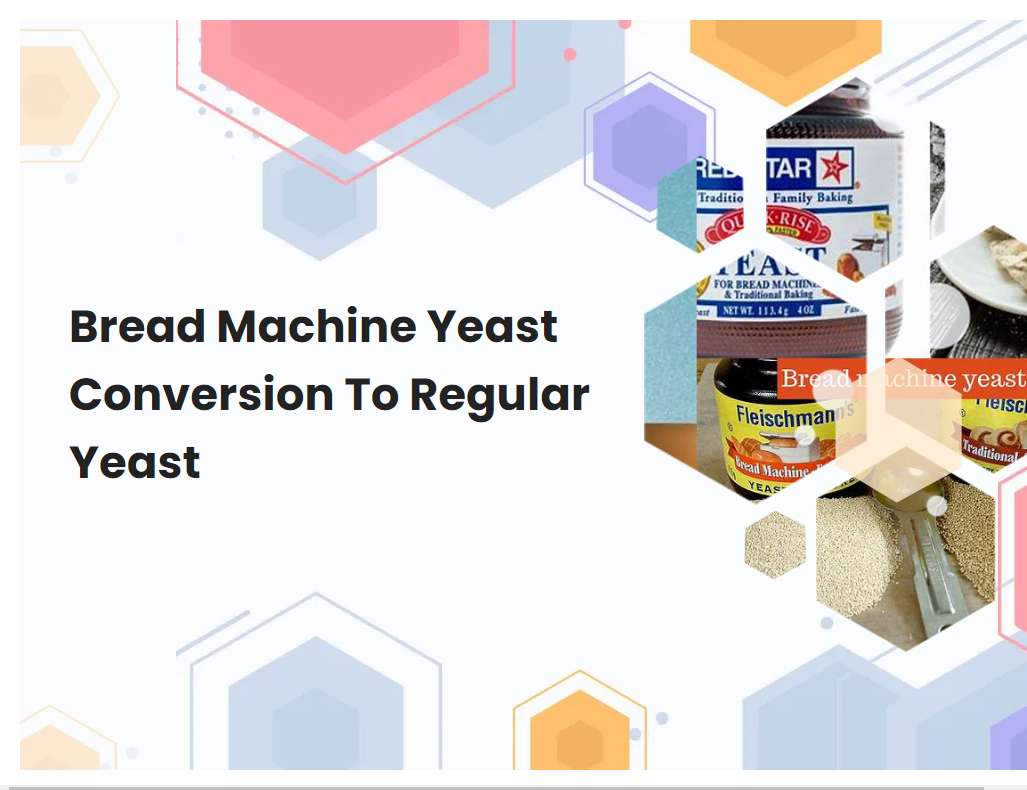
Machine yeast is specially formulated to work with bread machines and is different from regular active dry yeast.
Yeast is an essential ingredient in bread-making, and yeast specifically designed for bread machines is a must for successful results. Bread machine yeast, also known as machine-friendly or rapid rise yeast, is a special type of active dry yeast that is specially formulated to work with bread machines. It is finer and more granulated than traditional active dry yeast and dissolves more quickly in liquid.
Bread machine yeast also contains dough conditioners, like ascorbic acid, that help promote a better rise and better texture. This type of yeast won't require proofing before use, as the granules are already activated and ready to go. Bread machine yeast also ferments faster than regular active dry yeast, so it's a good option if you're in a rush or want to make a quick loaf of bread.
Regular active dry yeast is a granulated, free-flowing product that must be proofed (activated) before use.
Active dry yeast is a type of yeast used in baking. It is a granulated, free-flowing product that has been dehydrated to reduce its moisture content. This type of yeast needs to be rehydrated (or proofed) before use.
The proofing process involves mixing the yeast with warm water and a small amount of sugar, which helps to activate the yeast and get it ready for baking. Once proofed, the yeast will become foamy and bubbly, indicating that it is ready for use. Active dry yeast is used to leaven bread and other baked goods, creating light and airy textures. It is also used to ferment beer and wine, and can be a key ingredient in making various types of fermented foods and beverages. Because of its versatility and convenience, active dry yeast is a popular choice for many home and professional bakers.
See also: How Tomake Bread With Bread Machine Yeast
Because of its unique properties, machine yeast can be added directly to bread machine recipes without proofing.
Machine yeast is an amazing ingredient that makes baking easier and more convenient. Unlike traditional yeast, which must be proofed in order to activate it, machine yeast can be added directly to bread machine recipes. This eliminates the need for a lengthy and sometimes complicated proofing process.
Machine yeast is also highly active, so it helps to ensure that the dough rises quickly and produces a light, fluffy texture in the finished loaf. Additionally, machine yeast produces consistent results that are reliable and dependable. It also has a longer shelf life than traditional yeast, making it a great choice for busy bakers who don't have a lot of time to spare. All in all, machine yeast is an excellent tool for any baker's arsenal.
See also: My Bread Machine Bread Turns Out Too Dense Heavy
If a recipe calls for machine yeast, regular active dry yeast cannot be used as a substitute.
Machine yeast is a type of instant yeast that is specifically designed for use in bread machines. It is finely milled so that it can be mixed directly into the dry ingredients of the dough, eliminating the need to dissolve it in water before adding it to the recipe. Machine yeast is a more active form of yeast than regular active dry yeast, and therefore should not be used as a substitute.
Regular active dry yeast requires time to dissolve and activate in warm water before it can be added to a recipe. If machine yeast is used in place of active dry yeast, the dough will not have enough time to rise properly, resulting in a flat and dense end product. Additionally, the flavor and texture of the dough will be affected. For this reason, if a recipe calls for machine yeast, it should not be substituted with regular active dry yeast.
See also: How To Make Doughnuts In Bread Machine
To convert a recipe that calls for machine yeast to use regular active dry yeast, the amount of yeast should be reduced by 25%.
When converting a recipe that calls for machine yeast to use regular active dry yeast, it is important to remember to reduce the amount of yeast by 25%. This is because active dry yeast is less potent than machine yeast, so more of it is required to get the same effect. For example, if a recipe calls for 2 teaspoons of machine yeast, the equivalent amount of active dry yeast would be 1.5 teaspoons.
It is also important to note that active dry yeast needs to be rehydrated in warm water before use. This should be done according to the package instructions and should be done prior to adding it to the rest of the ingredients. When using active dry yeast, it is also important to remember that the dough will rise more slowly than it would with machine yeast and that the rising time should be adjusted accordingly.
See also: Breadman Bread Machine Fruit And Nut Beeping
When converting from machine yeast to regular active dry yeast, it's important to note that the dough may rise more quickly, so it's important to keep an eye on it and adjust the baking time accordingly.
When converting from machine yeast to regular active dry yeast, it is important to consider the effects of this substitution. Not only is the amount of yeast used different, but so is the action of the yeast. Machine yeast is designed to rise quickly and powerfully, while regular active dry yeast is more gradual.
This difference can cause the dough to rise more quickly when using active dry yeast, so it is important to keep an eye on it and adjust the baking time accordingly. Additionally, since active dry yeast needs to be rehydrated in warm water before use, it is important to allow for enough time for this step. Taking these factors into consideration will help ensure that your baked goods turn out as desired.
See also: Substitute For Wheat Gluten In Bread Machine
When converting from machine yeast to regular active dry yeast, it's also important to note that the texture of the finished loaf may be slightly different.
When converting from machine yeast to regular active dry yeast, it's important to keep in mind that the quantities need to be adjusted. Machine yeast is typically more concentrated than active dry yeast, so the recipe needs to be adjusted accordingly. For instance, if a recipe calls for 1 teaspoon of machine yeast, it would require 1 1/2 teaspoons of active dry yeast.
In addition, active dry yeast needs to be pre-dissolved in warm water before use, as it will not activate without moisture. The texture of the finished loaf may also be slightly different when using active dry yeast, as the dough may take longer to rise and the finished product may be slightly denser than a loaf made with machine yeast. For best results, it's important to follow the instructions on the active dry yeast package and adjust the recipe accordingly.
When using regular active dry yeast, it's important to dissolve the yeast in warm water (110-115F) before adding it to the dry ingredients.
When using regular active dry yeast, it is important to properly prepare the yeast before adding it to the other dry ingredients. The yeast should be dissolved in warm water (110-115F) before being combined with the flour and other ingredients. This activates the yeast and helps it to begin fermenting, allowing the dough to rise.
The water should not be too hot, as this can kill the yeast. If the yeast is added directly to the dry ingredients without being dissolved first, it will not activate and the dough will not rise. Additionally, it is important to remember to add a pinch of sugar to the water when dissolving the yeast, as this provides food for the yeast to help it begin fermenting. Following these steps will ensure that your dough rises properly and your baked goods turn out delicious every time.
If using regular active dry yeast, it's important to allow the dough to rise in a warm, draft-free location until it has doubled in size.
When using regular active dry yeast, it is essential to give the dough ample time to rise in a warm and sheltered location. The yeast needs the warmth and shelter in order to activate and produce the carbon dioxide gas bubbles needed to cause the dough to rise. The ideal temperature for the dough to rise is between 70-80°F (21-27°C).
This will help the dough double in size within 1-2 hours. If the temperature is too cold, the dough will take longer to rise, and if it is too hot, the yeast could become overactive and cause the dough to rise too quickly. To ensure optimal results, it is best to place the dough in a warm and draft-free spot, such as an oven with the light on, a turned off microwave, or a turned off oven with a bowl of hot water. A bowl of hot water can also be used to raise the temperature of a cooler location.
Always use fresh, high-quality ingredients when making bread for the best results.
When making bread, it is important to use the highest quality ingredients available. Fresh ingredients are best since they will have the most flavor and will help ensure that the bread turns out as intended. The flour should be high-quality and not too old, as it will have the most protein and gluten content and will yield a better texture.
Yeast should also be fresh, as older yeast will not rise as well and the bread will not rise properly. If using milk, it should be full-fat and not past its expiration date, as milk that has gone sour can ruin the flavor and texture of the bread. Using high-quality ingredients is essential for making delicious, fresh bread that everyone will love.





